Practical limits to polydispersity for quality colloidal crystals
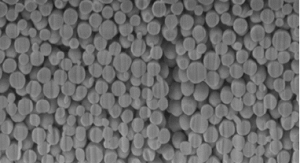
An experimental approach to systematically explore the link between particle polydispersity and the structure thin-film colloidal crystals.

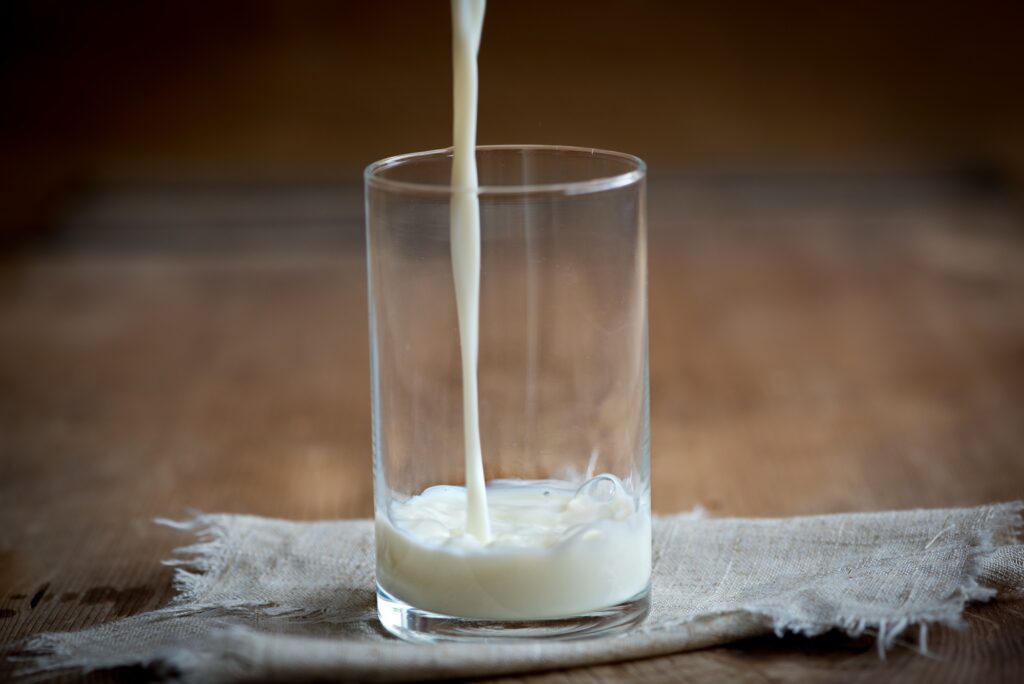
Have you ever poured milk into your morning coffee or over your cereal and wondered what it would look like under a microscope? Far from being a simple liquid, milk is a complex suspension containing a mixture of particles including fat globules and casein micelles. Analysing these particles can be challenging because their size distributions overlap, making it difficult for sizing techniques to determine which particles are which.
A team of researchers, including those from the University of Edinburgh and ECFP, has tackled this challenge by combining two complementary techniques to characterise the particle-size distribution of milk: Differential Dynamic Microscopy (DDM) and Cryogenic Focused Ion Beam Scanning Electron Microscopy (Cryo-FIB-SEM).
DDM is a high-throughput technique that provides volume-averaged particle-size distributions by analysing particle dynamics. While it can reliably identify a bimodal size distribution in milk, it cannot however determine the chemical identity of the different particle populations.
Cryo-FIB-SEM tomography provides three-dimensional images of the sample allowing components that can be distinguished based on image contrast. However data collection is time-consuming, so the number of particles that can be analysed is inherently limited.
The study highlights that these different techniques provide complementary information and insight, providing a more complete picture than each technique can achieve in isolation.
The implications extend well beyond milk. Many industrial suspensions such as foods, personal care products and pharmaceuticals, are multimodal in size and heterogeneous in terms of chemical composition. By combining complementary techniques, their components can be characterised to build a more complete picture of their composition.
Please get in contact with us to find out more about ECFP and whether we can help you.

An experimental approach to systematically explore the link between particle polydispersity and the structure thin-film colloidal crystals.

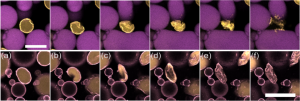
A new paper led by Dr Raj Tadi from the Soft Matter & Biological Physics group at the University of Edinburgh sheds light on how to control and manipulate compositional ripening in emulsions.

ECFP researchers have revealed how friction between microscopic cement grains can prevent the easy flow of fresh, unset concrete. Improving our understanding of these microscale processes will guide efforts to replace cement with more sustainable substitutes.